

In stainless steel procurement, surface finish is often as important as grade and thickness. The right stainless steel surface finish not only affects appearance but also influences corrosion resistance, cleanability, fabrication performance, and final project cost.
For international buyers sourcing from stainless steel suppliers, understanding the differences between common finishes such as 2B, BA, No.4, and Mirror finish stainless steel is essential for making the right purchasing decision.
This guide explains how each stainless steel finish is produced, where it is typically used, and how buyers can select the most suitable option.
1. What Is Stainless Steel Surface Finish
A stainless steel surface finish refers to the final texture or appearance of the material after rolling, annealing, pickling, polishing, or brushing processes.
Different finishes provide different performance characteristics, including:
- Visual appearance (industrial vs decorative)
- Surface roughness and cleanability
- Suitability for fabrication and forming
- Resistance to corrosion and contamination
- Project cost optimization
Choosing the correct surface finish stainless steel solution helps buyers balance performance and budget.
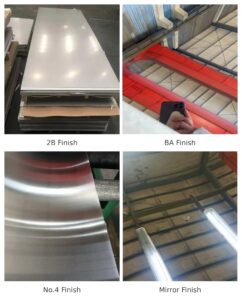
2. 2B Finish Stainless Steel
1) Production Process
2B finish stainless steel is produced through cold rolling, followed by annealing, pickling, and light skin-pass rolling.
2) Key Characteristics
- Smooth and slightly matte surface
- Uniform industrial appearance
- Good flatness and formability
- Cost-effective option for bulk procurement
3) Typical Applications
- Industrial equipment
- Stainless steel tanks and piping
- Structural fabrication
- General engineering projects
For many buyers sourcing stainless steel coil or sheet, 2B finish is the most widely specified option due to its balance of performance and price.
3. BA Finish Stainless Steel
1) Production Process
BA finish stainless steel is bright annealed in a controlled atmosphere furnace, resulting in a highly reflective surface without additional polishing.
2) Key Characteristics
- Bright, smooth, and reflective appearance
- Lower surface roughness compared with 2B
- Improved cleanability
- Suitable for light decorative applications
3) Typical Applications
- Kitchen equipment and appliances
- Stainless steel tubing
- Precision components
- Decorative panels
Buyers looking for a cleaner visual effect without the higher cost of mirror finish stainless steel often select BA finish.
4. No.4 / Brushed Finish Stainless Steel
1) Production Process
No.4 finish stainless steel is obtained through mechanical polishing using abrasive belts to create a controlled linear grain.
2) Key Characteristics
- Satin or brushed appearance
- Reduced glare and fingerprint visibility
- Good balance between aesthetics and durability
- Popular architectural finish
3) Typical Applications
- Elevator panels
- Interior decoration
- Food processing equipment
- Commercial kitchens
For projects requiring a professional decorative look, brushed stainless steel finish is often the preferred specification.
5. Mirror Finish Stainless Steel
1) Production Process
Mirror finish stainless steel is achieved through multi-stage mechanical polishing until the surface reaches a highly reflective level.
2) Key Characteristics
- Near-perfect reflection
- Premium decorative appearance
- Higher processing cost
- Requires careful handling during fabrication
3) Typical Applications
- Architectural cladding
- Luxury interior design
- Signage and branding panels
- High-end appliances
When visual impact is critical, buyers may choose mirror polish stainless steel sheet despite the higher price.
6. How to Choose the Right Stainless Steel Finish
When selecting a stainless steel surface finish, buyers should evaluate:
1) Application Environment
Corrosive or hygienic environments may require smoother finishes such as BA or mirror.
2) Aesthetic Requirements
Architectural and decorative projects typically specify No.4 or mirror finishes.
3) Fabrication Process
Deep drawing or heavy forming may favor 2B finish due to better workability.
4) Budget Considerations
Processing complexity directly affects the stainless steel price per ton, making finish selection an important cost factor.
5) Supply Form
Whether purchasing stainless steel coil, sheet, or plate, finish availability and lead time may vary among suppliers.
Conclusion
Understanding the differences between 2B, BA, No.4, and mirror finish stainless steel helps buyers select materials that meet both technical and commercial requirements.
A reliable stainless steel supplier can also provide value-added services such as slitting, cut-to-length, polishing, and protective packaging to support project execution.
For international buyers, early communication about stainless steel surface finish specifications can significantly reduce procurement risks and improve project efficiency.