


Precision alloys are functional metallic materials designed to provide specific physical properties, such as magnetic performance, controlled thermal expansion, elastic stability, electrical resistance, and dimensional reliability.
Unlike common structural metals, precision alloys are selected not only for strength or corrosion resistance. In many applications, buyers are more concerned about whether the material can maintain stable magnetic, thermal, or electrical performance under precise working conditions.
UPRIME Metal supplies precision alloy materials including:
1J50, 1J79, 3J01, 4J29, 4J36, and 4J42
These materials are widely used in electronics, precision instruments, sensors, sealing components, aerospace, communication equipment, energy systems, and industrial control applications. Precision alloys are generally used where magnetic, electrical, expansion, or elastic properties are critical to product performance.
Why Precision Alloys Are Used
Precision alloys are used when standard stainless steel, carbon steel, or general alloy steel cannot meet special functional requirements.
Depending on the alloy system, they may provide:
- High magnetic permeability
- Low coercivity
- Controlled thermal expansion
- Good elastic stability
- Stable electrical or physical properties
- Dimensional stability under temperature changes
- Reliable performance in precision components
For professional buyers, the key is not only whether a grade is available, but whether the material can meet the required functional performance after processing and heat treatment.
Main Alloy Groups in This Series
The precision alloy series supplied by UPRIME Metal mainly includes soft magnetic alloys, elastic alloys, and controlled expansion alloys.
Soft Magnetic Alloys
Soft magnetic alloys are used in applications requiring high magnetic permeability, low coercivity, and stable magnetic performance.
Typical grades include: 1J50 and 1J79
These alloys are commonly used for:
- Magnetic shielding
- Transformer cores
- Relay components
- Inductors
- Sensors
- Precision electromagnetic components
1J50 is commonly described as a nickel-iron soft magnetic alloy with high magnetic permeability, while 1J79 is widely used where high permeability and stable magnetic behavior are required.
Elastic Alloy
Elastic alloys are designed for components requiring stable elasticity, sensitivity, and fatigue resistance.
Typical grade: 3J01
This type of alloy is mainly used for precision elastic components where stable mechanical response is important, such as:
- Springs
- Diaphragms
- Elastic sensing elements
- Precision instrument parts
- Control components
For buyers, elastic alloys should be selected according to the required elasticity, working stress, forming method, and heat treatment condition.
Controlled Expansion Alloys
Controlled expansion alloys are used where dimensional stability or sealing compatibility is required under temperature changes.
Typical grades include: 4J29, 4J36, and 4J42
These alloys are commonly used in:
- Glass-to-metal sealing
- Ceramic-to-metal sealing
- Electronic packaging
- Precision instruments
- Aerospace components
- Measuring equipment
- Structural parts requiring low expansion
4J29 is commonly associated with Kovar-type sealing applications, while 4J36 is widely known as an Invar-type alloy with low thermal expansion. 4J42 is also used in controlled expansion and sealing-related applications.
Typical Application Areas

Precision alloys are widely used in industries where stable functional properties are more important than ordinary mechanical strength.
| Industry | Common Applications |
|---|---|
| Electronics | Magnetic cores, shielding parts, electronic packaging |
| Precision Instruments | Sensors, meters, measuring components |
| Communication Equipment | Magnetic components, signal-related parts |
| Aerospace | Sealing parts, precision structural components |
| Industrial Control | Relays, actuators, control elements |
| Energy Systems | Transformers, inductors, electromagnetic parts |
| Glass / Ceramic Sealing | Hermetic sealing components, electronic packages |
For buyers, the right selection depends not only on grade availability, but also on stable performance under actual service conditions.
Product Forms Available
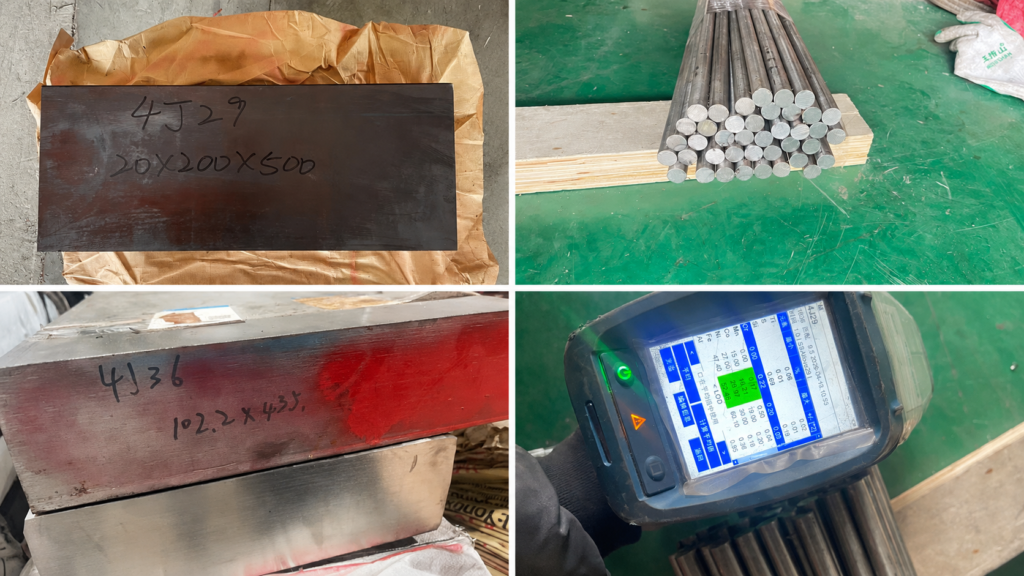
Precision alloys can be supplied in different product forms according to the final application and processing method.
| Product Form | Typical Use |
|---|---|
| Strip / Foil | Magnetic cores, shielding parts, precision stamping |
| Sheet / Plate | Electronic parts, instrument components, sealing parts |
| Bar / Rod | Machined parts, precision components |
| Wire | Springs, sensors, electronic components |
| Tube / Pipe | Special precision assemblies |
| Customized Parts | Cut-to-size or processed components |
For precision alloy procurement, product form and processing condition are often as important as the alloy grade itself.
Key Points Before Quotation
For precision alloy inquiries, buyers are advised to confirm the following information:
- Required grade or equivalent material
- Product form, such as strip, foil, sheet, plate, bar, wire, pipe or tube
- Size, tolerance, quantity and delivery requirement
- Required magnetic, expansion, elastic, or electrical performance
- Processing method, such as stamping, forming, machining or heat treatment
- Required certificates or inspection documents
Providing this information helps us recommend the suitable material, confirm availability, and offer a more accurate quotation for your project.
Grade Reference for Procurement
The following table is intended as a general procurement reference. Final material selection should always be based on the actual working condition and technical specification.
| Grade | Alloy Type | General Selection Direction |
|---|---|---|
| 1J50 | Soft magnetic alloy | Magnetic shielding, relay parts, transformer cores |
| 1J79 | Soft magnetic alloy | High-permeability magnetic components and precision instruments |
| 3J01 | Elastic alloy | Springs, diaphragms, elastic sensing components |
| 4J29 | Controlled expansion alloy | Glass-to-metal sealing, electronic packaging |
| 4J36 | Low expansion alloy | Precision instruments, measuring devices, dimensional stability parts |
| 4J42 | Controlled expansion alloy | Sealing components, electronic and aerospace-related parts |
This table helps buyers understand the general positioning of each grade without turning the article into a full technical datasheet.
How UPRIME Metal Supports Precision Alloy Sourcing
Precision alloy procurement often involves strict tolerance control, small-batch trial orders, functional performance requirements, and customized processing.
UPRIME Metal supports customers with:
- Precision alloy strip, foil, sheet, plate, bar, wire, pipe, and tube supply
- Grade matching based on application requirements
- Cut-to-size and customized processing
- Export-grade packaging
- Material documentation support
- Flexible sourcing for trial orders and project orders
- Long-term supply support for distributors and industrial users
We work with customers who need reliable material sourcing for electronics, precision instruments, sealing components, aerospace-related parts, industrial control systems, and functional metal applications.
Conclusion
Precision alloys such as 1J50, 1J79, 3J01, 4J29, 4J36, and 4J42 are used where magnetic, expansion, elastic, or dimensional properties are critical to product performance.
For professional buyers, successful sourcing depends on more than selecting a grade name. The final choice should consider the actual application, functional performance, product form, tolerance, processing method, and inspection requirements.
UPRIME Metal supplies precision alloy materials for industrial buyers, distributors, and factory procurement teams, supporting reliable sourcing, processing, packaging, and export documentation for precision engineering applications.